
Fear—that primal, heart-thumping sensation—is an undeniable part of the human experience. Whether it's the apprehension before a big presentation, the gnawing worry about an uncertain future, or the dread of failure, fear finds its way into our lives. But what if the very whispers of fear hold profound lessons? Delving into quotes about fear offers a unique lens, revealing the universal struggle and the timeless wisdom on how to confront, understand, and ultimately transcend it.
These distilled thoughts from philosophers, leaders, artists, and everyday heroes aren't just clever phrases; they're battle-tested truths, navigational charts for the storms within. They teach us that courage isn't the absence of fear, but the decision to move forward despite it, and that fear itself is often a mirage, a powerful, self-imposed limit.
At a Glance: Essential Wisdom on Fear
- Fear is a State of Mind: Often an illusion, a powerful liar that limits potential.
- Action is the Antidote: Movement, not thought, builds courage and dispels doubt.
- Courage is a Decision: It's about facing fear, not being fearless.
- Failure is Fuel: Mistakes are necessary for growth, innovation, and success.
- The Unknown is a Treasure Map: What we fear most often holds our greatest opportunities.
- Love & Faith Conquer Fear: These positive forces can drive out apprehension.
- Fear Prevents Life, Not Death: It stops us from living fully.
Understanding Fear's Universal Grip: Why It Matters to Know Your Enemy

We all know fear. It's that knot in your stomach, the racing pulse, the voice in your head whispering "don't do it." From the evolutionary reflex that keeps us safe from danger to the complex anxieties of modern life, fear is a fundamental human emotion. But as many wise minds have observed, its most debilitating form isn't the one that saves us from a charging bear, but the one that keeps us from living our fullest lives.
"Fears are nothing more than a state of mind," declared Napoleon Hill. This simple yet profound statement suggests that while the physical sensation of fear might be real, the true power it holds over us is often a construct of our own thoughts. It's a reaction, an illusion, a liar that limits our potential and prevents us from pursuing our dreams. Victor Frankl cut to the heart of this when he said, "Fear does not prevent death. It prevents life." Think about that: fear doesn't save you from the inevitable; it merely keeps you from experiencing the vibrant, challenging, joyful journey that is life itself.
This perspective is echoed in the spiritual realm too, where fear is often contrasted with its powerful opposite. The biblical verse, "Perfect love drives out fear" (1 John 4:18), highlights a core truth: where love, faith, and trust reside, fear loses its foothold. Recognizing fear as a state of mind, rather than an unassailable reality, is the first step towards understanding your power over it. As you discover quotes about life and fear, you'll find a recurring theme: true living means engaging with the world, not retreating from it.
Courage Isn't the Absence of Fear, But the Action Despite It
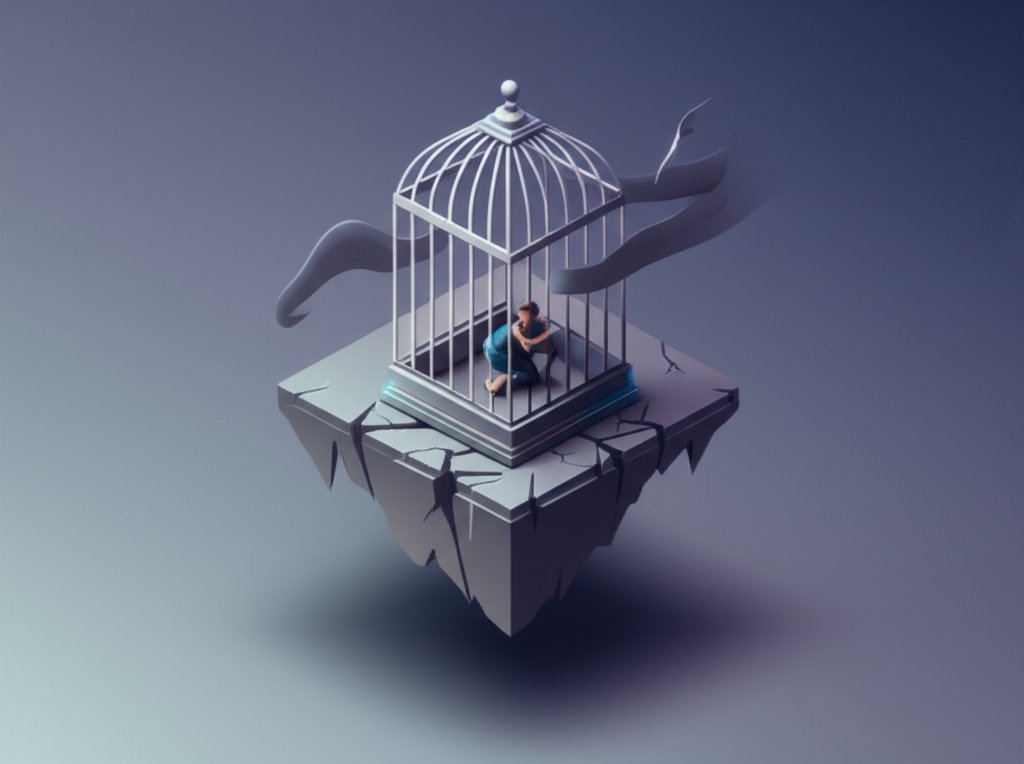
Perhaps the most empowering revelation from the collective wisdom on fear is this: you don't need to eliminate fear to be courageous. In fact, true courage can only exist in the presence of fear. This distinction is vital for anyone grappling with apprehension, reminding us that bravery isn't a genetic trait, but a conscious choice.
Nelson Mandela, a man who faced unimaginable fears, famously stated, "The brave man is not he who does not feel afraid, but he who conquers that fear." Similarly, Winston Churchill offered a concise truth: "Fear is a reaction. Courage is a decision." These aren't just eloquent sayings; they are blueprints for action. They tell us that the churning in your stomach, the trembling in your hands, isn't a sign to stop, but a signal that a decision for courage is at hand.
The antidote to fear’s paralyzing grip is almost universally described as action. Dale Carnegie, a master of self-improvement, put it plainly: "Inaction breeds doubt and fear. Action breeds confidence and courage." This creates a powerful cycle: you feel afraid, you act anyway, and that act diminishes the fear and builds your resolve for the next challenge. The practical advice from Susan Jeffers, "Feel the fear and do it anyway," encapsulates this perfectly. It’s not about waiting for fear to disappear; it’s about moving forward while it’s still present, letting your actions diminish its power.
To move beyond living in fear quotes and truly embrace a life of action, consider Eleanor Roosevelt’s famous decree: "Do one thing every day that scares you." This isn't about reckless abandon, but about intentionally pushing the boundaries of your comfort zone, proving to yourself, daily, that fear is a challenge to be met, not an impenetrable wall.
Unmasking Fear's Many Faces: From Failure to the Unknown
Fear isn't a monolithic entity; it wears many masks. Understanding these different guises helps us address them more directly. From the apprehension of falling short to the dread of what lies ahead, these specific fears often dictate our choices, or lack thereof.
The Fear of Failure: The Road Not Taken
One of the most common and crippling fears is the fear of failure. It keeps us from starting businesses, applying for dream jobs, pursuing creative passions, or even speaking our minds. Yet, wisdom dictates that failure is not an end, but a necessary step. Brené Brown, a leading voice on vulnerability, asserts, "There is no innovation and creativity without failure. Period." Failure isn't just an option; it's a prerequisite for growth and discovery.
Consider the words of Confucius: "Our greatest glory is not in never failing, but in rising every time we fall." This reframes failure from a mark of shame to a testament of resilience. Comfort, while appealing, is often the enemy of progress. As Ginni Rometty pointed out, "Growth and comfort do not coexist." To truly achieve, to innovate, to grow, you must be willing to stumble, to learn, and to keep moving.
The Enigma of the Unknown: What You Can't Control
The human mind craves certainty, and when faced with ambiguity, fear often rushes in to fill the void. The fear of the unknown is a deeply ingrained apprehension, from career changes to new relationships. Yet, within this uncertainty often lies immense opportunity.
Marie Curie, a pioneer who ventured into scientific unknowns, offered a profound perspective: "Nothing in life is to be feared, it is only to be understood." This suggests that the unknown is less a monster and more a puzzle awaiting our curiosity. Joseph Campbell, the mythologist, famously said, "The cave you fear to enter holds the treasure you seek." This powerful metaphor reminds us that our greatest breakthroughs and personal rewards are often on the other side of our deepest apprehensions. Engaging with quotes about fear of the unknown can illuminate this path, showing you how others have navigated the uncertain. Similarly, contemplating sayings on fear of unknown can provide historical perspective and comforting wisdom.
The Shadow of Others' Opinions: The Invisible Chains
"The greatest fear in the world is the opinion of others," Oscar Wilde observed. This fear can be more insidious than any other because it often masquerades as social wisdom or propriety. It prevents us from being authentic, from taking bold steps, and from pursuing what truly matters to us, all to avoid criticism or judgment.
Even deeper, Marianne Williamson suggests, "Our deepest fear is not that we are inadequate. Our deepest fear is that we are powerful beyond measure." This is a paradigm shift: perhaps we fear our own potential, the responsibility that comes with our gifts, and the light we could cast if we truly embraced our power, unburdened by others' expectations. Kerry Washington expands on this, noting, "Fear limits you. Fear of failure holds you back; fear of success stops you." It's not just the fear of not being good enough, but the fear of being too good, of standing out, that can keep us playing small.
Strategies to Transform Fear into Fuel
Instead of letting fear stop you dead in your tracks, what if you could harness its energy? Many thinkers suggest that fear, when understood and approached correctly, can serve as a potent motivator, a vital teacher, or a crucial warning signal.
Action as the Ultimate Antidote
We've touched on this, but it bears repeating: action is the most powerful weapon against fear. "If you want to conquer fear, do not sit home and think about it. Go out and get busy," advised Dale Carnegie. Overthinking feeds fear; doing starves it. Even small steps create momentum. Each successful step, no matter how tiny, builds confidence and chips away at the fear's foundation. Muhammad Ali's challenge, "He who is not courageous enough to take risks will accomplish nothing in life," underscores the necessity of moving beyond the comfort zone.
Understanding & Exposing Fear
As Marie Curie suggested, understanding dispels fear. When you shine a light on what you're afraid of, it often loses its power. What exactly are you afraid of? Is it a specific outcome, a feeling, or a perception? By dissecting your fear, you expose its roots, allowing you to address them directly rather than being overwhelmed by a vague sense of dread. "To overcome fear, you have to be able to look it in the eye," said Paul Coelho, highlighting the importance of direct confrontation.
The Choice: Fear vs. Love and Faith
This isn't just a spiritual concept; it's a profound psychological truth. When we operate from a place of love—love for ourselves, for others, for our purpose—fear has less room to grow. Faith, whether in a higher power, in humanity, or in your own capabilities, provides a foundation of trust that counters the instability fear thrives on. The contrast is stark: fear contracts and isolates; love expands and connects. The choice is always yours. For more on how to channel your internal drive, explore motivated by fear.
Reframing Fear: A Guide, Not a Guardian
Pema Chödrön offers a compelling reframe: "Fear can either shut us down or turn us on." This suggests that fear's energy is neutral; it's our interpretation and reaction that determine its impact. Can you view your fear as a warning signal guiding you to prepare better, or as a motivator to strengthen your resolve? Can it be a teacher, showing you where you need to grow? By shifting your perspective, you transform a debilitating emotion into a source of intelligence and drive.
Your Fear Status: A Self-Assessment for Growth
Before you can conquer fear, you need to understand its current hold on you. What are your specific fears? How do they manifest? This isn't about dwelling on negativity but gaining clarity.
- What are your "limits you believe" (Wayne Dyer)? These are the self-imposed boundaries fear draws. Identifying them is the first step to erasing them.
- What situations or thoughts consistently trigger fear in you? Jot them down. Understanding these patterns reveals your vulnerabilities.
- What potential have you held back because of fear? Be honest. This gives you a clear vision of what's at stake.
- What "opinions of others" (Oscar Wilde) are you allowing to dictate your life? Detaching from external validation is crucial for autonomy.
By taking this understand your fear status assessment, you begin to demystify fear, transforming it from an amorphous monster into a definable challenge. Seneca reminds us, "We suffer more often in imagination than in reality." This is a powerful truth: much of our fear is anticipatory, built on imagined future outcomes rather than present facts.
Conquering Fear: Practical Steps from the Masters
Drawing on the deep well of wisdom from across centuries, here’s a framework for effectively facing and mastering fear in your life:
Step 1: Acknowledge and Observe It
Don't pretend it's not there. When fear arises, simply notice it. Paul Coelho advises, "To overcome fear, you have to be able to look it in the eye." This doesn't mean succumbing to it, but rather observing it without judgment. Where do you feel it in your body? What thoughts accompany it? This detached observation helps you realize that you are not your fear; you are the one observing it.
Step 2: Uncover Its Illusion
Challenge the narrative fear creates. Napoleon Hill reminds us, "Fears are nothing more than a state of mind." Is the threat real and immediate, or is it a hypothetical scenario spun by your imagination? Expose the story fear is telling you to the light of truth. Often, what we truly fear is the discomfort of growth, not actual danger. "Our deepest fear is that we are powerful beyond measure," as Marianne Williamson suggests.
Step 3: Take Decisive, Incremental Action
This is the linchpin. Ralph Waldo Emerson noted, "Fear defeats more people than any other one thing in the world." The only way to combat this defeat is through action. Start small if you must. Do the thing you're afraid of, even in miniature. If you fear public speaking, start by speaking up in a small group. If you fear starting a business, take one small step: register a domain name, research a competitor. "Go out and get busy," as Dale Carnegie recommends. Each action builds a brick of confidence.
Step 4: Embrace Failure as Necessary Feedback
The fear of making a mistake can be paralyzing. However, as Brené Brown highlights, "There is no innovation and creativity without failure." Understand that failure isn't the opposite of success; it's part of the process. It's information, feedback, a course correction. Winston Churchill put it well: "Success is not final, failure is not fatal: it is the courage to continue that counts." See every setback as a learning opportunity, not an indictment.
Step 5: Cultivate Courage Daily
Courage isn't a one-time act; it's a muscle you develop. Eleanor Roosevelt's "Do one thing every day that scares you" is excellent training. This habit transforms your relationship with fear. You learn to expect it, to acknowledge it, and to push past it consistently. This daily practice reinforces that you are the master of your mind, not a slave to your fears. The fears you don't face truly become your limits, as Robin Sharma reminds us.
Frequently Asked Questions About Overcoming Fear
You've got questions about fear, and the collective wisdom provides clear answers.
What's the fundamental difference between fear and courage?
Fear is a primal emotion—a reaction to perceived threat, real or imagined. Courage, on the other hand, is a conscious decision. It's not the absence of fear, but the choice to move forward, act, or persist despite feeling afraid. As Winston Churchill famously said, "Fear is a reaction. Courage is a decision."
Can fear ever be a good thing?
Absolutely. Fear serves several vital functions. It can be a warning signal, alerting us to genuine dangers and prompting us to prepare or protect ourselves. It can be a motivator, spurring us to excel or make necessary changes. Pema Chödrön articulated this duality: "Fear can either shut us down or turn us on." The key is to distinguish between rational, protective fear and irrational, limiting fear.
Is it possible to be truly fearless?
The consensus from many thinkers, including Mark Twain, is that "Courage is resistance to fear, mastery of fear, not absence of fear." A truly "fearless" person might be reckless or lack an essential human emotion. The goal isn't to eradicate fear, but to develop the tools and mindset to manage it, to not be controlled by it, and to use its presence as a signal for growth. Bertrand Russell noted, "To conquer fear is the beginning of wisdom"—not to eliminate it entirely.
How do I stop fear from preventing me from living my life?
The core message from almost every expert is to take action. "Fear does not prevent death. It prevents life," says Victor Frankl. To reverse this, you must actively confront your fears, even in small ways. "If you want to conquer fear, do not sit home and think about it. Go out and get busy," advises Dale Carnegie. Life begins where fear ends, as Osho profoundly put it. By continuously choosing action over inaction, you reclaim your life from fear's grip.
Beyond the Quotes: Living a Life Defined by Courage, Not Caution
The wisdom embedded in these quotes about fear offers more than just philosophical musings; it provides a practical roadmap for a life truly lived. You now know that fear is often a mental construct, a powerful illusion that can only limit you if you allow it. You understand that courage isn't reserved for heroes, but is a decision available to everyone, every single day.
The journey isn't about becoming immune to fear, but about changing your relationship with it. It's about recognizing the cave you fear to enter holds the treasure you seek, as Joseph Campbell eloquently stated. It's about accepting that growth and comfort cannot coexist, and that embracing failure is integral to success. It's about heeding the profound words of Marcus Aurelius: "It is not death that a man should fear, but he should fear never beginning to live."
So, take these insights, internalize them, and begin. Step out of the shadows cast by apprehension and into the light of action. The brave may not live forever, but as the anonymous saying goes, the cautious do not live at all. Choose bravery. Choose life.