For the bigger picture and full context, make sure you read our main guide on Quotes About Fear Reveal Essential Wisdom for a Fearless Life.
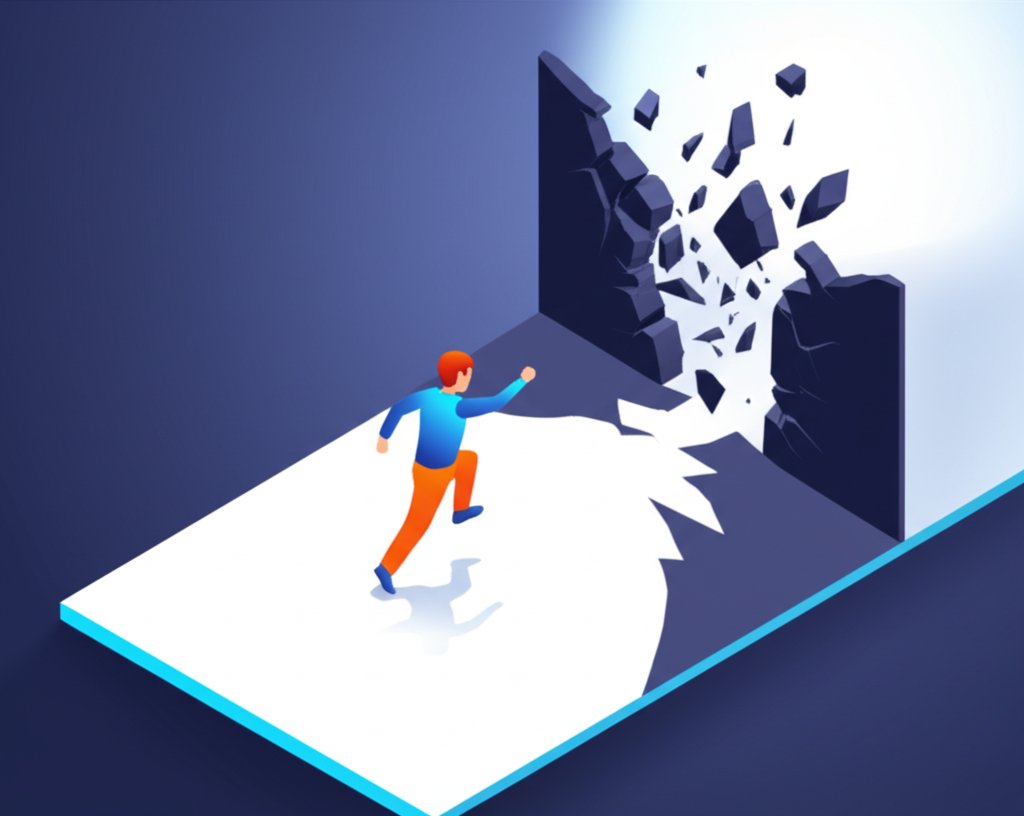
The feeling of being stuck in a high fear status is a uniquely human experience – a mental and emotional state that can feel as real and impenetrable as a physical barrier. It's that nagging sense of dread, the cold grip of anxiety, or the pervasive worry that keeps us from moving forward. We often perceive it as an immovable object, but what if understanding its true nature is the first step toward dismantling it? What if this "status" isn't a fixed identity, but a temporary condition ripe for transformation through deliberate action?
At a Glance: Shifting Your Fear Status
- Understand Fear's True Nature: It's often a state of mind, an illusion fueled by imagination, not always reality.
- Recognize the Cost of Inaction: How paralysis limits life and potential, preventing growth and opportunity.
- Embrace Action as the Antidote: Learn why doing, even small things, is the most potent weapon against fear.
- Redefine Courage: Discover that bravery isn't the absence of fear, but the decision to act despite it.
- Practical Strategies for Breakthrough: Implement specific steps to move from fear to confident execution.
- Unlock Growth and Opportunity: See how confronting your fears leads directly to personal expansion and achievement.
Decoding Your Current Fear Status: Is It Reality or Illusion?
Our fear status is fundamentally a psychological construct. Napoleon Hill concisely states, "Fear is nothing more than a state of mind." This isn't to diminish the very real physical and emotional sensations fear evokes, but rather to highlight its origin. Often, the intensity of our fear status comes not from an immediate, tangible threat, but from an internal narrative. As Seneca wisely noted, "We suffer more often in imagination than in reality."
Think about it: how many worries consume your thoughts that never actually materialize? How many potential negative outcomes do you rehearse, only for the actual event to be far less daunting? This imaginative suffering is the bedrock of a high fear status. Frank Herbert went further, calling fear "the mind-killer." It chokes off rational thought, creativity, and problem-solving, replacing them with a singular, self-perpetuating cycle of anxiety.
The consequence of dwelling in this imagined fear status is severe. Victor Frankl observed, "Fear doesn't prevent death. It prevents life." This isn't hyperbole. When fear dictates our choices, we avoid risks, opportunities, and challenges that are essential for growth. Les Brown lamented, "Too many of us are not living our dreams because we are living our fears." Your current fear status isn't just an unpleasant feeling; it's a direct impediment to your potential, a self-imposed limitation that, as Robin Sharma points out, becomes our boundary if not confronted.
The Irresistible Force: Why Action Always Transforms Fear Status
If fear is a state of mind, then action is its most potent counter-programming. Dale Carnegie famously articulated this: "Inactivity breeds doubt and fear. Action breeds confidence and courage." This isn't just a motivational slogan; it's a psychological truth. When we are static, our minds have free rein to conjure worst-case scenarios, amplifying our fear status. But when we act, even in the smallest way, we interrupt this cycle. We gather evidence that we can cope, that the imagined threat might not be so bad, or that we possess the resilience to handle whatever comes.
Consider Eleanor Roosevelt's timeless advice: "Do one thing every day that scares you." This isn't about reckless abandon. It's a deliberate, systematic approach to chipping away at your fear status. By consistently engaging with discomfort, you desensitize yourself to the triggers that previously kept you paralyzed. Jim Morrison's radical suggestion, "Expose yourself to your deepest fear; after that, fear has no power," speaks to the ultimate outcome of this process: when you confront what you most dread, its hold often dissipates.
The essence of this strategy is encapsulated by Susan Jeffers: "Feel the fear and do it anyway." This phrase is not about ignoring fear or pretending it doesn't exist. It acknowledges the very real presence of fear but insists that it does not have to be a stopper. It's about choosing to act despite the tremor in your hands or the knot in your stomach. Each such act is a vote for courage, a step away from a debilitating fear status and towards a life of greater agency.
For a deeper dive into the timeless principles that underpin these transformative shifts, exploring the broader context of how various thinkers have viewed fear can provide additional perspectives on this journey from paralysis to purpose. You can find more essential wisdom for fearless living by understanding the comprehensive insights from various sources.
Courage Isn't a Feeling, It's a Decision
One of the most profound misconceptions about overcoming fear is that courage means not feeling scared. This couldn't be further from the truth. Nelson Mandela, a man who faced unimaginable adversity, clarified this distinction perfectly: "Courage is not the absence of fear, but the triumph over it." He added, "The brave man is not he who does not feel afraid, but he who conquers that fear." Mark Twain echoed this sentiment, stating, "Courage is resistance to fear, mastery of fear – not absence of fear."
Your fear status doesn't magically vanish when you decide to be brave. Instead, courage is the active choice to proceed even while fear is present. Emma Donoghue eloquently separates the two: "Fear is what you feel. Brave is what you do." This distinction is crucial because it shifts the focus from an internal emotional state (which can feel uncontrollable) to an external, observable action (which is entirely within your control).
Mini-Example: Imagine you're afraid to speak up in a meeting. Your fear status manifests as a racing heart, sweaty palms, and a sudden blank mind. Courage isn't the absence of these symptoms; it's the decision to raise your hand, take a deep breath, and articulate your point anyway. Each time you do this, you reinforce a new pattern, gradually weakening fear's grip and strengthening your resolve.
Unlocking the Treasures Beyond Your Fear Status
Stepping beyond your comfort zone and challenging your ingrained fear status isn't just about reducing anxiety; it's about unlocking immense personal growth and opportunity. The "cave you fear to enter holds the treasure you seek," as Joseph Campbell famously wrote. This metaphor isn't just poetic; it's a practical guide. The very things we avoid out of fear are often the paths to our greatest rewards, insights, or successes.
George Addair put it even more directly: "Everything you've ever wanted is on the other side of fear." This is a powerful truth. Whether it's a career promotion, a meaningful relationship, a creative pursuit, or a personal challenge, the path to achieving these aspirations almost always involves confronting some form of fear. The fear of failure, rejection, inadequacy, or the unknown acts as a gatekeeper.
- Growth and Comfort Don't Coexist: Ginni Rometty's observation that "Growth and comfort do not coexist" highlights an essential trade-off. To evolve, to learn, to expand your capabilities, you must inevitably step into discomfort.
- Life Begins Where Fear Ends: Osho’s powerful statement encapsulates the transformative potential. When you are no longer constrained by your fear status, you are free to truly live, to explore, to create, and to experience life fully, rather than merely existing within self-imposed boundaries.
A Practical Playbook for Shifting Your Fear Status
Moving from a debilitating fear status to one of empowered action requires a deliberate strategy. Here’s a practical playbook you can start using today:
- Pinpoint Your Specific Fear Status:
- Identify the Trigger: What specific situations, thoughts, or anticipated outcomes bring on your fear? Is it public speaking, confrontation, financial risk, or something else?
- Observe the Manifestation: How does your fear status show up? Is it physical (pounding heart, muscle tension), emotional (anxiety, dread), or mental (negative self-talk, paralysis)? Naming it makes it less amorphous.
- Question the Reality: Is this a genuine threat (e.g., a car speeding towards you) or an imagined one (e.g., fear of judgment from colleagues)? Most chronic fears fall into the latter category.
- Embrace the "Micro-Action" Approach:
- Small Steps, Big Impact: Don't aim to conquer your biggest fear in one leap. Break down the daunting task into the smallest possible actions. If you fear public speaking, start by speaking up briefly in a team meeting, then volunteer to lead a small discussion, gradually escalating.
- Consistency Over Intensity: The power lies in consistency. Doing one small scary thing every day, as Eleanor Roosevelt suggested, builds momentum and resilience far more effectively than occasional grand gestures.
- Celebrate Mini-Wins: Acknowledge every small step you take. Each micro-action is evidence that you can act despite fear, gradually rewriting your internal script about your capabilities.
- Cultivate a Mindset of Faith and Love:
- Fear vs. Love: The anonymous quote, "The opposite of fear is not courage; it is love," and 1 John 4:18, "There is no fear in love. But perfect love drives out fear," highlight a powerful counter-force to fear. When you approach situations with a mindset of compassion, understanding, and genuine connection (love for self, others, or the pursuit), the space for fear shrinks.
- Faith as a Cushion: Philip Gulley's insight, "Fear can keep us awake all night, but faith becomes a comfortable pillow," illustrates the power of belief—belief in yourself, in a higher purpose, or in the positive outcome. Cultivating this internal sense of trust acts as a buffer against anxiety.
- Build a Support Ecosystem:
- Accountability Partners: Share your goals and fears with a trusted friend, mentor, or coach. Having someone to check in with and encourage you can make a huge difference.
- Seek Guidance: If your fear status feels overwhelming, don't hesitate to seek professional help from a therapist or counselor. They can provide tools and strategies tailored to your specific challenges.
Quick Answers: Dispelling Common Myths About Fear Status
Q: Is it truly possible to live a "fearless life" or completely eliminate my fear status?
A: Not in the sense of never feeling fear. Fear is a natural human emotion and a survival mechanism. As Nelson Mandela taught, courage isn't the absence of fear, but the "triumph over it." The goal isn't to be emotionless, but to prevent fear from dictating your actions and limiting your life. The aim is to master your fear status, not eradicate all sensation of it.
Q: I'm completely paralyzed by my fear status. How do I even start taking action?
A: Start incredibly small. Don't think about the "big" action. Think about the next, tiniest possible step. If you fear calling someone, just open your phone to their contact. If you fear writing, just open a blank document. As Eleanor Roosevelt advised, "Do one thing every day that scares you," even if that one thing is almost imperceptibly small. Momentum builds from micro-actions.
Q: What if my fear is rational and based on a real threat?
A: This is where differentiating between true danger and imagined threats is crucial. If the fear is rational (e.g., a genuine risk to safety), then the action isn't to ignore it but to strategize intelligently. Assess the risk, develop a plan to mitigate it, and then act on the plan. This moves you from a reactive fear status to one of proactive problem-solving. It's about taking control where possible, rather than succumbing to paralysis.
Your Next Move: Shifting Your Fear Status Today
Your fear status is not a permanent tattoo; it's a dynamic condition that responds to your choices. The path to a more courageous, fulfilling life isn't about eradicating fear, but about consistently choosing action despite it.
Here’s your quick start:
- Identify one small fear that has been holding you back. This could be making a difficult phone call, asking for help, starting a new project, or trying a new skill.
- Break it down into the absolute smallest first step you can take. Make it so easy you can't say no.
- Commit to taking that micro-action today. Don't overthink it, just do it.
- Reflect: Notice how you feel after taking that tiny step. Acknowledge your bravery.
- Repeat: Make this a daily practice. Each micro-action builds your confidence and weakens the grip of fear, progressively transforming your fear status into one of empowerment and possibility.
Remember, growth and comfort do not coexist. The courage to act, even when you feel afraid, is the most direct route to unlocking everything you've ever wanted.